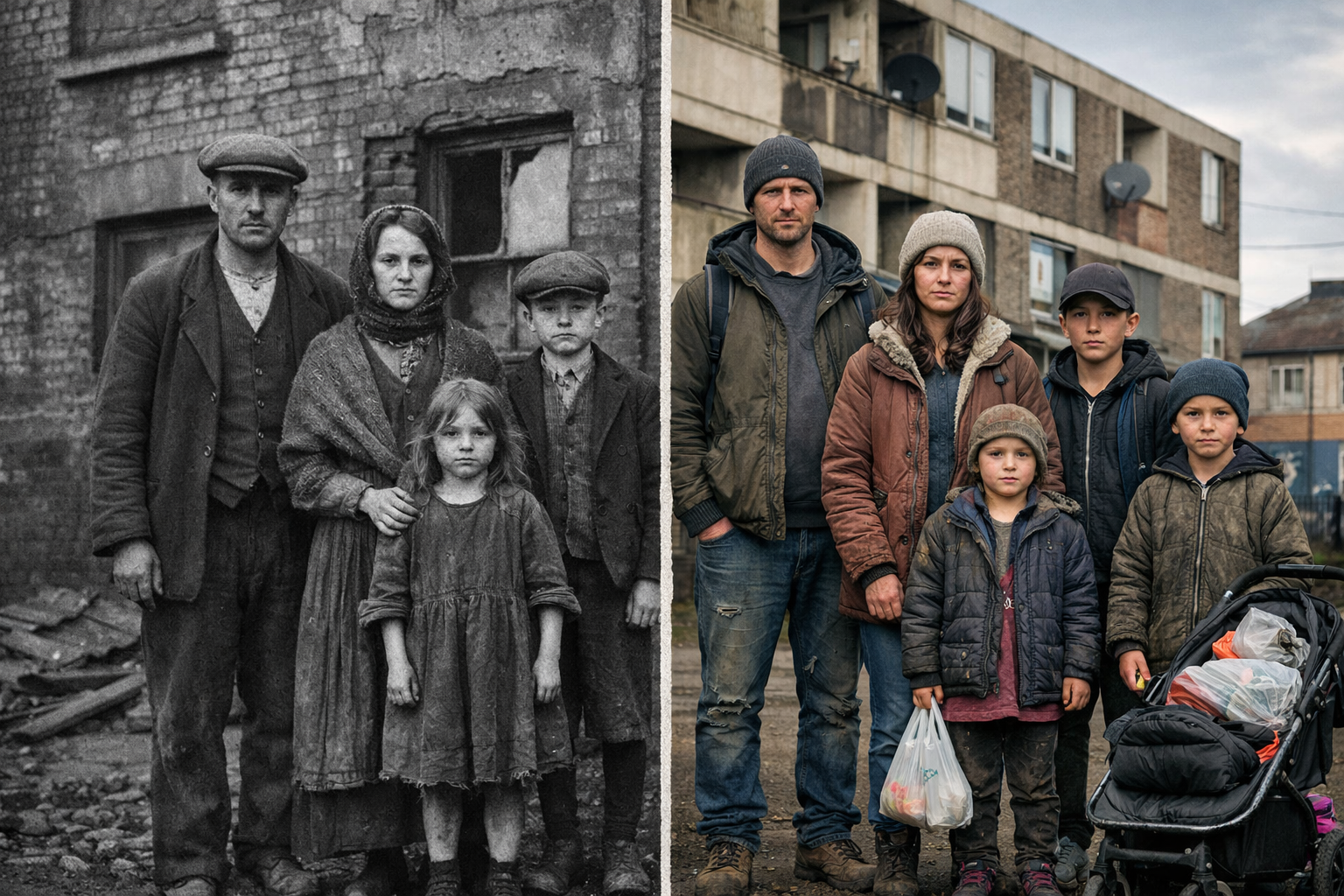

We’ve all heard the line: “There just aren’t enough homes.”
It’s trotted out by politicians, developers, and commentators like it’s gospel. Not enough homes, too many people, planning rules too tight, NIMBYs blocking progress. The private sector’s trying, they say, but the state holds it back.
I’ve worked in UK planning for nearly 40 years — inside councils, outside as a consultant, sat across the table from developers, housing associations, civil servants, and furious residents. And I’m here to tell you: that story is a fairy tale.
The truth is darker. And simpler.
We’re not here by accident. We’re here because we chose to dismantle a system that once worked — and replace it with one that benefits a very narrow slice of society.
The housing crisis isn’t a temporary blip. It’s a feature, not a bug.
And we can’t fix it by tweaking. We have to change the system entirely.
This is what that means.
The Illusion of Scarcity
If you listen to the headlines, you’d think the crisis is down to one thing: not enough homes.
It sounds plausible, doesn’t it? Just build more, and we’ll all be fine.
But here’s the thing — we have been building. Over two million homes in the last two decades. So why are rents still surging? Why are evictions up, homelessness rising, and waiting lists eternal?
Because the problem isn’t just quantity. It’s quality, ownership, affordability, and purpose.
We’re building luxury flats sold off-plan to overseas investors. Converting office blocks into windowless shoeboxes. Filling up brownfield sites with rabbit hutch apartments no local teacher or nurse can actually afford.
“Affordable housing” is now defined as 80% of market rent — which, in many places, is still eye-watering. It’s like calling a £5 pint a discount because it’s not £6.
Meanwhile, social housing has been decimated. Private renting has doubled. First-time buyers are priced out before they even start saving.
This isn’t just a supply issue. It’s a system rigged for the wrong outcomes — where homes are treated as investment vehicles, not places to live.
Build more? Yes. But not like this.
How We Got Here: The System Isn’t Broken — It Was Built This Way
The current housing system isn’t broken. It’s working exactly as intended — just not for you.
In the post-war era, we knew how to house people. Councils built at scale. Homes were secure, affordable, decent. Housing was treated like infrastructure — not a commodity to trade.
Then came the great shift.
Right to Buy hollowed out the council housing stock. Millions of homes were sold off, often at deep discounts, and councils were banned from using the proceeds to replace them.
Now, in a twist of pure absurdity, local authorities rent back those same homes from private landlords — at twice the cost.
Next came the buy-to-let boom. Fuelled by mortgage products and tax incentives, landlordism exploded. Homes became pensions. First-time buyers had to compete with property portfolios. And still do.
Developers? They learned the game fast. Promise affordable housing, then claim the numbers don’t “stack up.” Use viability loopholes. Cut deals. Deliver the bare minimum.
Even housing associations — once social missions in bricks and mortar — were pushed to become developers, debt-funded and market-driven.
Every lever was pulled to shift risk away from the state — and towards tenants, councils, and renters.
If you’re wondering why nothing changes, it’s because this is the model. And it’s working very nicely for the people it was designed to serve.
The Public Pays Twice
Here’s where it gets properly outrageous.
The UK spends over £24 billion a year on housing benefit — the vast majority of it going to private landlords. That’s not building homes. That’s renting failure at public expense.
And that’s just the visible cost.
When people can’t afford secure housing, everything else suffers: health, education, employment, family stability. Councils foot the bill for emergency accommodation. Social care takes the strain. Homelessness services buckle.
We are pouring money into the cracks instead of fixing the structure.
Then there’s the moral insult. We sold off public homes, blocked councils from replacing them, then pay private landlords to house the same families — in the same buildings — for double the rent.
This isn’t policy. It’s a racket.
We’ve normalised public money being used to subsidise private extraction, rather than invest in lasting public assets.
The public pays twice: once in tax, and again in consequences.
And we call this affordable?
Who Benefits? Who Loses?
Follow the money.
When house prices rise, homeowners feel wealthier. Politicians celebrate. Developers cheer. Banks profit. Landowners rake it in.
Everyone with an asset wins.
But what about everyone else?
Renters lose. First-time buyers lose. Families on waiting lists lose. Councils trying to deliver services lose.
This isn’t a policy failure. It’s a deliberate wealth transfer. The housing system has become a machine that moves money upward — from the pockets of working renters into the portfolios of investors and landlords.
And the rules are designed to keep it that way.
Affordable housing targets are watered down through viability games. Public land is sold to the highest bidder. Planning policy is rewritten to favour “delivery” — no matter what gets delivered, or for whom.
Real reform? That’s a threat to the system. That’s why it’s resisted.
This crisis continues not because we can’t fix it — but because fixing it would upset the people who currently benefit.
And they have lobbyists. And lawyers. And lunch with ministers.
The Language Trap: “Affordable” and Other Lies
If you want to hide a failing system, start by twisting the language.
“Affordable housing” used to mean social rent — low, stable, based on income. Now, it’s a catch-all for everything from shared ownership to near-market rents with a discount sticker slapped on.
A two-bed flat at £1,500 a month in London? Technically “affordable.”
A one-bed shared ownership unit with hidden fees and a staircasing trap? Also affordable.
The word means nothing now. And that’s the point.
Then there’s “Help to Buy” — which mostly helped drive up prices.
“Viability assessments” — which help developers wriggle out of commitments.
“Choice” — which means picking between overpriced, underregulated, insecure rentals.
This isn’t sloppy language. It’s weaponised ambiguity. It allows politicians to announce progress while the crisis deepens.
Until we speak clearly — about rent, ownership, security, and need — we’ll keep measuring success by the wrong yardstick.
And we’ll keep failing the people who need help the most.
So What Do We Do?
Here’s the good news: we know how to fix this.
We don’t need a miracle. We just need to stop pretending the private market will do what it’s never been designed to do.
We need to:
Build public housing again — at scale, for permanence, for people. Treat housing as infrastructure — like hospitals or schools, not hedge fund fodder. Give councils the tools and funding to lead, not just beg developers for scraps. Create a new definition of affordability — based on income, not market distortion. Own land publicly, and stop fuelling speculation that prices out our own children.
This isn’t utopian. Vienna does it. Zurich does it. We used to do it.
The difference is political will.
Instead of pumping billions into housing benefit, we could be building homes people can actually afford — homes that last, that don’t leak, that don’t evict you by text message.
The alternative isn’t radical. It’s sensible.
The real radicals are the ones who believe we can keep doing the same thing and somehow expect different results.
The Moment to Act
We’re not in a housing crisis because of red tape. Or migrants. Or lazy councils.
We’re here because we dismantled a functioning public system — and replaced it with one that rewards speculation, debt, and extraction.
But we don’t have to keep doing this.
There is growing public support for council housing. People are angry, not apathetic. The excuses are wearing thin. The slogans are falling flat.
What we need is simple:
A home you can afford. A tenancy you can trust. A system that serves people, not portfolios.
That’s not ideological. That’s basic governance.
The real question isn’t whether we can fix the system.
It’s whether we’re ready to admit that the current one is designed to fail.
Because once we do that — the path forward gets a lot clearer.
And it starts by reclaiming what housing is actually for.
Leave a Reply